
| WTI Crude | $63.15/bbl | +5.8% |
| Brent Crude | $66.11/bbl | +6.0% |
| HH Nat Gas | $2.65/MMBtu | +6.0% |
| MB Propane | $0.78/gal | -5.5% |
| 3:2:1 Crack | $17.55/bbl | -4.7% |
More progress from this waste-to-polyolefins project
Japanese-based chemical company, Sumitomo Chemical, has selected EPC firm, Toyo Engineering, to construct an ethanol-to-ethylene pilot plant at its site in Chiba, Japan.
Catching you up:
We last saw an update on this project back in December when Sumitomo selected Axens' ethanol dehydration technology. Today's announcement just means that Toyo will do all of the detailed engineering, procurement, and construction of Axens' process. The companies are looking to start-up that pilot plant sometime next year.
Zooming out:
Ethanol-to-ethylene is just one piece of the puzzle—the company still needs to produce ethanol and put that ethylene to work. Sumitomo is partnering with Sekisui (who partnered with LanzaTech) to produce ethanol from mixed waste. Because that waste could include plastic waste, this process could give advanced recycling methods like pyrolysis a run for its money someday. That's because this recycling process will produce a pure stream of ethylene without the need for a steam cracker.
Read the press release here.
Clariant wants to stabilize more plastic in China
Swiss specialty chemicals company, Clariant, has announced the opening of a new joint venture production facility for process and light stabilizers in Cangzhou, China.
What are they making?
Without stabilizers, polymer chains break down quicker and lose the physical properties that make them so useful (impact strength, tensile strength, elongation, etc.). Clariant's new facility will produce many different stabilizers to prevent polymers from degrading during their manufacture and when exposed to light. The company specifically mentioned its intent to produce this polyamide stabilizer.
One step back:
We often hear about how bad our plastic pollution problem is becoming. Stabilizers, like the chemical additives Clariant is producing, extend the useful life of plastic and therefore reduce how much plastic must be thrown away. Extending that useful life makes plastic a lot more valuable.
Read the press release here.
Avantium's bio-glycol demonstration plant was a success
Netherlands-based sustainable chemicals company, Avantium, has announced the successful production of bio-based MEG and MPG at its demonstration plant in Delfzijl, The Netherlands.
A quick refresher:
We last saw Avantium when the company scored a couple of offtake contracts for the PEF it plans to make in the future. Since then, the company secured another contract and now has found buyers for over half of the plant's planned capacity.
Wait, what about MEG and MPG?
Avantium is producing MEG and MPG by applying a hydrogenolysis process to plant-based sugars (from non-food biomass or crops like corn, wheat, or beets). These two glycols are used primarily for things like coolants and antifreeze, but Avantium's primary goal is to bring an alternative polyester to market. That alternative polyester (PEF) has some superior properties when compared to the fossil-based PET, but it's certainly not going to take PET's throne any time soon.
Read the press release here.
The Reboiler:
- W.R. Grace & Co licensed its UNIPOL PP process technology for a new MTO plant in Uzbekistan
- McDermott and New Energy completed the engineering for two green H2 projects
- The US EIA predicts more gasoline demand this summer due to fiscal stimulus and vaccinations
- Shell's ethylene oxide catalyst will be sued at JDU's 360,000 ton per year facility
- Praj Industries will build India's largest sugarcane-based ethanol plant
- Biden's new budget is seeking $75M for PFAS research
MOTD: toluene
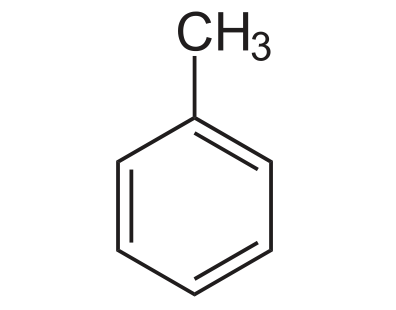
Today's MOTD is the one and only… toluene.
Owing its name to the balsam of Tolu, the world now produces some 33 million tons of toluene each year.
Most of that toluene is made at refineries thanks to the catalytic reforming of naphtha, but a good bit is made from the production of coke (which you'll see the most of in China). At refineries that toluene is found as a component in BTX and most of it is never separated from its aromatic friends—it's just blended into gasoline.
Even when that toluene is isolated, most of it ends up being used to make B and X (benzene and xylene). The rest is used to make TDI (for polyurethanes), TNT (for blowing up stuff), benzoic acid, and benzaldehyde.
Given that most of the molecule is made at refineries it shouldn't be a surprise that ExxonMobil, Sinopec, and Shell are some of the key players.