| WTI Crude | $52.25/bbl | -1.1% |
| Brent Crude | $54.80/bbl | -1.3% |
| HH Nat Gas | $2.86/MMBtu | +1.4% |
| MB Propane | $0.96/gal | +3.8% |
| 3:2:1 Crack | $12.36/bbl | +0.9% |
Celanese to make more LCP for 5G and IoT
US-based chemical company, Celanese, has announced its intent to build a world-scale, multi-phase liquid crystal polymer (LCP) polymerization plant in China.
First, a little context:
Celanese is a world leader in the production of LCPs—only Polyplastics (which used to be a Celanese JV), Sumitomo, Solvay, and a few others produce comparable quantities. The company has been in the LCP market for a while but has given the unique polymer more attention since it acquired DuPont's LCP business a decade ago. Now, Celanese plans to start building a new site (exact location still unknown) sometime in 2024.
So why build another plant?
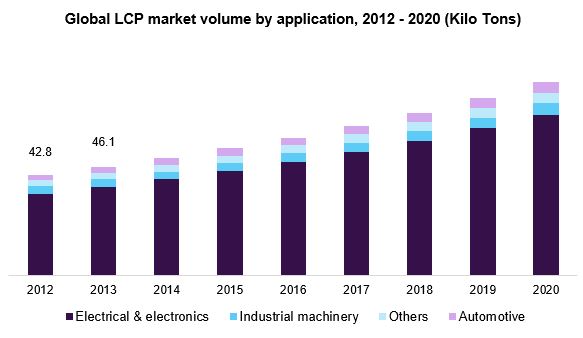
LCPs find themselves in electronics more than anything, primarily as part of circuit boards. That's because LCPs have low dissipation factors and dielectric constants (making them good for high-frequency electronics). Celanese is anticipating demand "for materials that support device miniaturization, improved signal integrity, and circuit densification", and quotes "5G, Internet of Things, and vehicle electrification" as the macrotrends driving that demand.
Read the press release here.
New plant in Europe to convert waste to jet fuel
Leader in sustainable aviation fuel solutions, SkyNRG, has announced that it will build a first-of-its-kind facility converting waste into ethanol (and then into jet fuel) using LanzaTech's technology.
What's the technology?
We last saw LanzaTech working on a waste-to-olefins plant in Japan, and this time the story isn't all that different. LanzaTech's core technology converts waste into ethanol by fermenting syngas, but this project makes use of that ethanol differently. The ethanol is converted, using a proprietary catalytic process, into synthetic paraffinic kerosene by dehydrating the ethanol and combining the remaining hydrocarbon molecules into chains.
Zooming out:
Blending sustainable aviation fuel (SAF) with traditional kerosene is currently the only viable method of reducing emissions associated with aviation. The 30,000 tons per year this plant will produce won't make a dent in the issue, but if the technology proves to be successful you'll see more of these plants.
Read the press release here.
Haldor Topsoe's catalyst makes brown gas clear
Danish chemical technology company, Haldor Topsoe, has announced that its TertiNOx™ technology is now successfully being used at Kavala Fertilizer's nitric acid plant in Greece.
Helpful background:
Most nitric acid (about 80%) is used to produce ammonium nitrate for fertilizers, plastics, and making dyes. But the production of nitric acid results in nitrous oxide and NOx emissions (which are particularly potent greenhouse gases). Haldor's catalyst removes those nitrogen-containing compounds, down to 10ppm, from the gas headed to our atmosphere.
The details:
Before the new catalyst, this nitric acid plant emitted a visible brown plume of nitrous oxide and NOx compounds. After the switch, the plant has now reduced its "greenhouse gas emissions by more than 30,000 tons CO2 equivalents per year.". That's roughly equivalent to the emissions from 6,000 cars.
Read the press release here.
The Reboiler:
- Marathon Petroleum gets a new CFO
- Total to develop France's largest green hydrogen site
- Neste gets into another partnership for SAF
- Asahi Kasei to build another microcrystalline cellulose plant
- Sulzer drops $144 million to acquire Nordic Water
MOTD: caprolactam
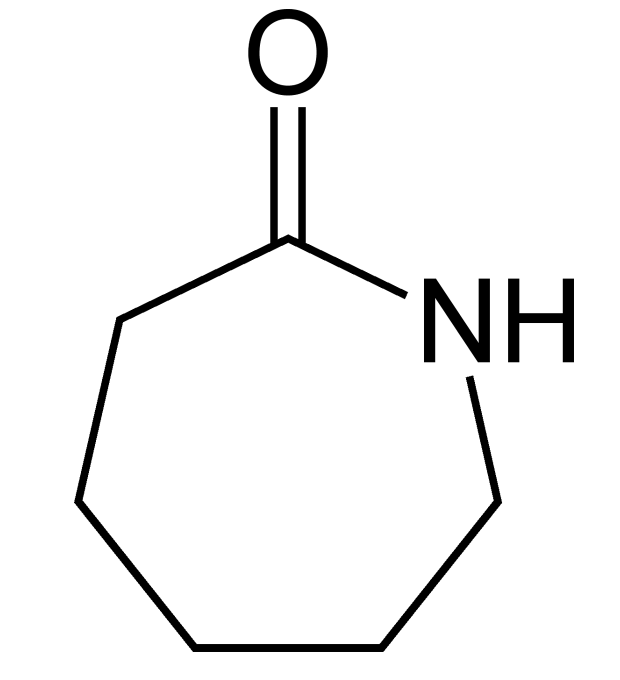
Today's MOTD is the one you've been asking for…caprolactam.
First described in the late 19th century, the world now produces nearly 7 million tons per year of caprolactam.
The leading producers of the chemical are Fibrant, Sinopec, BASF, and Advansix. New producers, like Genomatica, are now attempting to scale the production of caprolactam from a bioprocess.
Today, most of the caprolactam made (about 90%) is synthesized from cyclohexanone. Almost all of what is produced is later polymerized to make Nylon 6 (which takes its final form as a filament, fiber, or plastic).