
Good morning. Hopefully your President's Day has gotten off to a good start and you have time for some news about chemicals.
| WTI Crude | $91.26/bbl | +0.0% |
| Brent Crude | $98.95/bbl | +2.9% |
| HH Nat Gas | $4.61/MMBtu | +0.0% |
| MB Propane | $1.29/gal | +0.0% |
| 3:2:1 Crack | $22.77/bbl | +0.0% |
DuPont may have sold its soul to Celanese
US-based chemical company, Celanese, has decided to acquire most of DuPont's Mobility & Materials (M&M) business for $11.0 billion.
What's that business?
DuPont is selling 850 patents and 29 facilities associated with the production of nylons (PA66, PA6), specialty nylons (HPPA, LCPA, filaments), polyesters (PET and PBT), and elastomers (TPC and EAE). Those products raked in about $800 million in EBITDA last year (roughly 85% of its M&M profits). The remaining 15% that DuPont is hanging onto comes from its Auto Adhesives, Multibase, Tedlar (polyvinyl fluoride film), and Derlin (polyacetyl) product lines.
Some context:
From a financial perspective, anyone could identify that this divestment is a big deal. But that's not the important part. The big takeaway here is that DuPont is no longer the company your grandparents remember (in terms of their assets). After it invented nylon in the 1930s, DuPont's name has become synonymous with the polymer. It was an exciting sequel to Rayon that encouraged product development across the molecule-making industry.
Celanese's take:
Since the advent of this newsletter, Celanese has been looking to grow what it calls its "engineered materials" business. The company bought Exxon's Santoprene TPU business last July and is expecting to double its "total free cash flow within the next five years".
Read the press release here.
TotalEnergies just bought some depolymerized polymer
American process technology company, Honeywell UOP, announced that French oil major, TotalEnergies, signed an offtake agreement for its upcoming molecular recycling site in Spain.
Catching you up:
Last November, Honeywell let the world it has also been working on depolymerization. The company announced its very own process technology and plans to deploy it for the first time with a Spanish operating company called Sacyr. Like most of the molecular recycling sites were seeing, their upcoming site is depolymerizing mixed waste plastic via pyrolysis to sell pyrolysis oil. Honeywell is calling their pyrolysis oil "recycled polymer feedstock".
So, what's the deal?
Offtake agreements are basically just the chemical company equivalent of a pre-order. Almost all of the main petrochemical companies are scrambling for as much pyrolysis oil as they can get their hands on. For now, that means signing offtake agreements and forming a lot of joint venture sites. Time will tell whether that will be enough for the long run.
Read the press release here.
The Reboiler:
- This Italian chemical company just started up its lignocellulosic ethanol plant
- Ashland is going to make more hydroxyethylcellulose (HEC) in Hopewell, Virginia instead of China
- These companies are interested in converting CO2 into jet fuel
- Aemetis is acquiring a site in India to refine tallow oil for a renewable refinery
- Mitsubishi Chemicals is building a pilot plant to study plant-based MMA monomers
MOTD: vcm
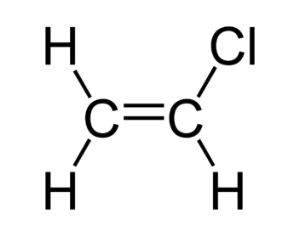
Today's MOTD deserves a round of applause, it's vinyl chloride.
Despite its sweet odor, this molecule is a highly toxic and carcinogenic intermediate that serves one single purpose—to produce polyvinyl chloride (that's PVC). Today, we produce about 60 million tons of vinyl chloride (commonly referred to as VCM) each year to do just that.
While the molecule was first synthesized in 1835, it wasn't until Waldo Semon figured out how to make PVC less brittle that we started make tons of this stuff. About half of the world's VCM is made by thermally cracking EDC (which is made by the direct chlorination of ethylene), and the other half is made by reacting acetylene with hydrogen chloride. The acetylene half of production is done almost entirely in China thanks to the region's vast coal and lime resources that make acetylene relatively cheap.
The main producers of VCM are the same ones who make PVC—think of Westlake Chemical, OxyChem, Shintech, and Formosa.