| WTI Crude | $81.25/bbl | +0.5% |
| Brent Crude | $82.43/bbl | +1.6% |
| HH Nat Gas | $5.51/MMBtu | -1.4% |
| MB Propane | $1.38/gal | -0.6% |
| 3:2:1 Crack | $19.98/bbl | -6.5% |
Chevron just released renewable motor oil
American refiner, Chevron, has announced the launch of its first partially renewable synthetic motor oil.
Motor oil 101:
Base oils, often called gas and lubricating oils, are produced by refiners via crude oil distillation. After those oils come out of the lower fraction of the column (seen here) they are processed into various grades based on purity.

When Base I and Base II oils (referred to colloquially as mineral oil) are used to make motor oil we call it are "conventional". Motor oils made from Base III oils are considered "synthetic" in the US, but "conventional" outside of the US. Everyone agrees that motor oils made from Base IV oils (polymerized linear alpha olefins, called PAOs) are "synthetic". Just remember that Base I-III are derived from crude oil and that Base IV is derived from natural gas.
What makes this new oil renewable?
Chevron is part of a joint venture (JV) with a biotechnology company called Amyris. Before Chevron joined the JV, Amyris got it started in Brazil based on farnesene (which is made by fermenting sugars with a proprietary yeast). It's not spelled out anywhere, but it seems like farnesene is the basis of its sustainable synthetic oil. Chevron is blending that stuff (25%) with its traditional Base III oils (75%) to make a partially renewable 0W-16 motor oil.
One last thing:
0W-16 isn't very popular in the US, but you'll find it being used in some Honda Fits and Toyota Camrys. Rumor has it that the renewable 0W-16 actually performs better than the non-renewable version.
Read the press release here.
Honeywell UOP gets in on molecular recycling
American process technology company, Honeywell UOP, has announced its own molecular recycling technology and plans to deploy it at a new plant in Spain.
A little history:
Honeywell UOP has been around for a minute. The UOP (Universal Oil Products) part of the company's name basically gave birth to the modern refining industry when the company introduced a continuous thermal cracking process to produce gasoline in 1920. The following decades saw the introduction of fluid catalytic cracking (FCC) and steady increases in the octane rating of gasoline (in part because of lead). The company's CCR Platforming technology made it possible to produce high-octane gasoline without that lead. In short, Honeywell UOP has a solid reputation.
Okay, so molecular recycling?
Right now, we're seeing a ton of different operating companies (like Exxon, Shell, and TotalEnergies) announce plans to build their very first molecular recycling plants. Most of which are licensing process technologies from process technology companies (like Honeywell UOP). We likely won't know who has the superior process technology until these first plants become operational. But given the Honeywell UOP's history, you can expect their take on molecular recycling to be among the best. We'll have to see what happens when the plant in Spain starts up.
Read the press release here.
DuPont gets deeper into specialty materials
American specialty chemicals company, DuPont, is acquiring engineered materials company, Rogers Corporation for $5.2 billion and planning to divest a big chunk of its Mobility & Materials business.
What they are buying:
Just to jog your memory, we saw DuPont acquire an electronic materials company for $2.3 billion back in March. Now, DuPont wants to stick Rogers Corporation inside of its rapidly expanding Electronics & Industrial business as well. Rogers' Advanced Electronics Solutions and Elastomeric Material Solutions businesses make all of the specialty materials you've never heard of—including those in electric vehicles (EVs). Click through their website for a few minutes and you'll see hundreds of use cases.
Zooming out:
DuPont, following all of its recent restructurings, is trying to capitalize on the rapidly expanding EV, autonomous driving (ADAS), and 5G markets. Rogers' EV and ADAS markets are seeing annual growth rates near 25%. The Engineering Polymers and Performance Resins part of DuPont's Mobility & Materials business, although much larger in terms of revenue, is not seeing that same growth.
Read the press release here.
The Reboiler:
- Wood landed a contract from Renewable Energy Group to expand its biorefinery in Louisiana
- Arxada (the renamed Lonza divestment) is merging with microbial-control specialist Troy
- Nouryon is planning to incrase its colloidal silica production in the US
- ExxonMobil and PT Pertamina are looking into CCS in Indonesia
- SI Group officially sold its industrial resins business to ASK Chemicals
MOTD: hydrogenperoxide
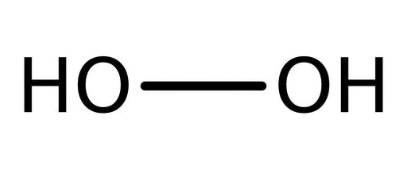
Today's MOTD is the one you've been dreaming about… hydrogen peroxide.
First described by a French chemist as "eau oxygénée" (oxygenated water) in 1818, it took nearly a century for us to figure out how to purify the molecule. At the start of the 20th century the world produced about 2,000 tons of hydrogen peroxide—now we pump out roughly 5 million tons each year.
After BASF developed the anthraquinone process in 1939, alternative production methods quickly became obsolete. Now virtually every hydrogen peroxide molecule made on earth is produced by this method. About 85% of that hydrogen peroxide is used for bleaches, with most of the remainder being used to purify water.

The main companies making all that H2O2 are Solvay, Evonik, and Arkema (among many others).