
| WTI Crude | $75.37/bbl | +2.5% |
| Brent Crude | $77.51/bbl | +0.7% |
| HH Nat Gas | $3.67/MMBtu | -3.2% |
| MB Propane | $1.11/gal | +6.9% |
| 3:2:1 Crack | $16.20/bbl | +5.0% |
Celanese just bought part of ExxonMobil
US-based chemical company, Celanese, has decided to acquire ExxonMobil's Santoprene TPV elastomers business for $1.1 billion.
Santowhat?
Santoprene, which is a thermoplastic elastomer (TPE), was developed (and trademarked) by Monsanto in the late 1970s. If you want to get fancy with it, this TPE is a vulcanized ethylene propylene diene monomer rubber encased in a polypropylene matrix. Exxon got its hands on the technology in a roundabout way that ended with an acquisition in 2002.
What they are saying:
Celanese has had excess cash since it sold its stake in Polyplastics about a year ago, and Exxon is looking to improve its profit (and reduce its debt burden) by selling its lower-margin operations. As reported by C&EN, you can expect Celanese to expand Santoprene into Asia and Exxon to focus on its core polyolefin operations.
Read the press release here.
Ethylene-based MMA is officially coming to Texas
German-based methacrylates producer, Röhm, will officially build a methyl methacrylate (MMA) plant along the Gulf Coast in Bay City, Texas.
Some context:
Röhm, birthed by Evonik's divestment in 2019, owns the rights to the Plexiglas (PMMA) trademark outside of the US and is a major producer of MMA and PMMA globally. This announcement shouldn't come as a surprise—the industry has expected an announcement for years and we talked about it just a few months ago.
Why this is a big deal:
MMA has been derived in many ways over the years, but the world has yet to see the molecule made via ethylene. The US Gulf Coast's relatively cheap ethylene is switching up trade flows and replacing old MMA capacity with ethylene-based technology (which should make the US a net MMA exporter). Röhm's new plant and Mitsubishi Chemical's new plant are both expected to start up in 2023.
Read the press release here.
LyondellBasell partially exited a joint venture
Global petrochemical corporation, LyondellBasell, decided to exit its joint venture (JV) with an Australian investment management firm and retain the JV's Malaysian assets.
Spelling it out for you:
LyondellBasell's JV (called PolyPacific) down under has been operating since 1980 as Australia's sole polypropylene producer. PolyPacific integrated downstream by establishing a compounding facility in Malaysia in 1997. Now, LyondellBasell is exiting the joint venture and acquiring its compounding facility—so now the site will be rebranded and the employees will now work for LyondellBasell.
More on compounding:
After petrochemical companies produce your most common thermoplastics (PE and PP) they aren't always ready for that molding machine. Oftentimes, various additives, fillers, pigments, and reinforcers are blended with the virgin PE or PP by a compounder. LyondellBasell is one of a few petrochemical companies that handles some of the compounding themselves (like this site in Malaysia).
Read the press release here.
The Reboiler:
- Rolls-Royce and Shell are working together on sustainable aviation fuel
- BASF's global pigment business is no longer BASF's
- The Flemish government is helping Ineos build a small power-to-methanol plant
- Clariant and India Glycols made their JV official for renewable EO derivatives
- NextChem is bringing green ammonia and bio-ethanol to Latin America
- AkzoNobel just copped a Colombian paints and coatings manufacturer
MOTD: aniline
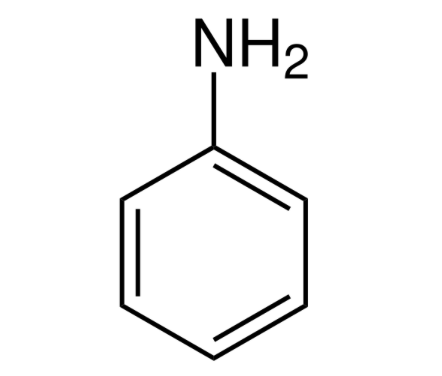
Today's MOTD is the one you've been asking for… aniline.
You probably know aniline most intimately from a commonly performed lab in organic chemistry using azo dyes. While only about 2% of the aniline produced today is used to make dyes and pigments, the molecule was first produced industrially for exactly that. It's legacy can be found in the name of the world's largest chemical producer—BASF (originally called Badische Anilin- und Soda-Fabrik).
The world produces some 6 million tons of aniline each year by reacting benzene with nitric acid and hydrogenating the product. The vast majority (almost 90%) of the molecule is used to produce MDI (which is used to make rigid polyurethanes) and the rest becomes rubber processing chemicals and those dyes mentioned earlier.
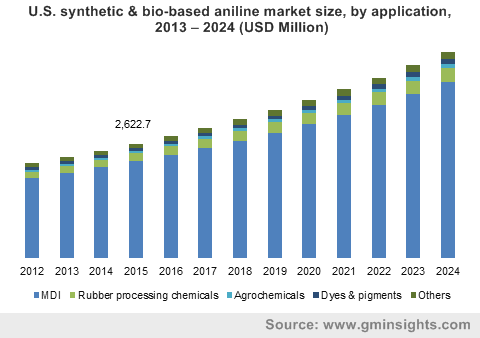
The aniline market is faily consolidated as the top 5 producers are responsible for around 60% of global production. That top 5 is led by BASF, Covestro, and Wanhua.