| WTI Crude | $81.23/bbl | -0.9% |
| Brent Crude | $82.91/bbl | -0.4% |
| HH Nat Gas | $4.56/MMBtu | -17.5% |
| MB Propane | $1.38/gal | -0.4% |
| 3:2:1 Crack | $18.28/bbl | -3.8% |
Braskem and Lummus to tackle biobased ethylene
Brazilian petrochemical producer, Braskem, announced that it will license its ethanol dehydration technology through a partnership with process technology firm, Lummus Technology.
Some context:
Ethylene is traditionally produced by naphtha and ethane steam crackers (both of those feedstocks come from fossil fuels). But back in 2010, Braskem started up a huge ethanol dehydration plant—that site in Brazil produces about 200,000 tons of biobased ethylene per year. That single plant makes Braskem the world's largest biopolymer (biobased polyethylene) producer.
Why Braskem?
Braskem built that biobased ethylene plant for two reasons: Brazil was already producing tons of ethanol via sugarcane fermentation, and Brazil lacked the natural gas resources (to make ethylene from ethane) that the US found in fracking. Now, with all of these sustainability tailwinds, Braskem is posed to become a technology leader in biobased ethylene.
Looking forward:
You'll find Lummus' technologies in hundreds (if not thousands) of plants around the globe. They're even mentioned in today's last story. We already know that these two companies will license the technology for this plant in Thailand, but you should be on the watch out for a plant coming to North America pretty soon.
Read the press release here.
Origin's newest capacity reservation
Sustainable chemical start-up, Origin Materials, has announced that Korean polymer and textile producer, Kolon Industries, has signed a multi-year capacity reservation for its carbon-negative furandicarboxylic acid (FDCA).
Bringing you up to speed:
Much of Origin's promise lies in its promise to economically convert cellulosic biomass into mostly one molecule—chloromethyl furfural (CMF). CMF can be used to make all sorts of molecules that end up becoming PET, PEF, and various other polyesters, polyurethanes, and polyamides. The company is expecting to complete the construction of its first site at the end of next year (check out an update on their progress here).
More on this agreement:
Basically, Kolon Industries wants to use some of the carbon-negative FDCA that Origin is planning to produce in a couple of years. Kolon's "deep polymer expertise in novel FDCA-based polymers", namely PEF, will come in handy as the companies work together to bring what Origin produces to market. Maybe we'll see PEF finally catch on after years of failing to gain market share relative to PET.
Read the press release here.
Koch's petrochemical subsidiary shuffle
American conglomerate, Koch Industries, has announced that it will be transferring the propylene business of its subsidiary, Flint Hills Resources (FHR), to its other subsidiary, Invista.
What's moving exactly?
FHR's propylene business consists of a propylene plant in Houston, TX, a polypropylene plant in Longview, TX, and the pipelines supplying those sites. The company bought the propylene plant (based on Lummus' Catofin propane dehydrogenation technology—which we talked about recently) from PetroLogistics back in 2010. The polypropylene plant was bought from Huntsman back in 2007.
Now what?
Invista was formed from DuPont's textile division in 2003 and is most well known for making nylon 6,6. While there is limited integration between those propylene businesses and what Invista has been up to, the move consolidates Koch's petrochemical assets into a single entity. Koch is no stranger to acquisitions, so maybe we'll see the company try to put together a cohesive petrochemical company.
Read the press release here.
The Reboiler:
- Axens invested in Plastic Energy to accelerate molecular recycling
- Solvay and 9T Labs are working together to scale additive manufacturing for carbon-fiber-reinforced plastics
- Phillips 66 is converting its Alliance Refinery into Terminal Facility
- Arkema switched up its branding a little bit to better fit specialty materials
- Milliken now has more way to modify recycled polypropylene viscosity
MOTD: cyclohexane
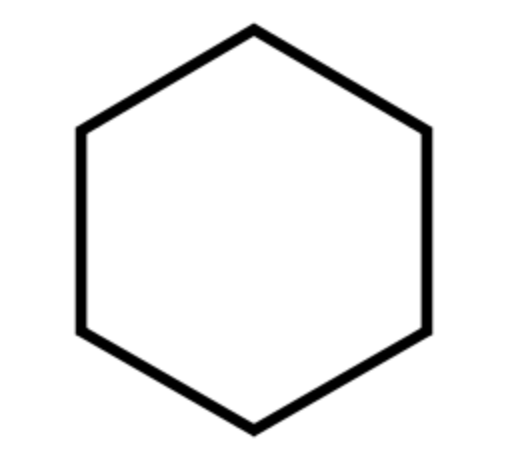
Today's MOTD is a great conversation starter, it's cyclohexane.
This molecule is the one responsible for making you draw that weird chair confirmation thing in organic chemistry. Cyclohexane, unlike its resonant cousin benzene, was first produced by synthesis (as it wasn't found naturally occuring in coal). Today, the world produces cyclohexane by hydrogenating benzene in the presence of the same catalyst Murray Raney used to hydrogenate vegetable oils in the 1920s.
About 10% of the world's benzene is used to make cyclohexane, so annual production of cyclohexane is roughly 6 million tons each year. Virtually all of that cyclohexane is used to make cyclohexanol and cyclohexanone, which, in turn, are mainly used to make caprolactam (45%) and adipic acid (22%). Both adipic acid and caprolactam are primarily used to make nylon.
The cyclohexane market is fairly fragmented—the main producers don't produce much more than the minor producers. In any case, the companies producing cyclohexane are typically those who produce benzene or those nylon precursors. Think of BASF, CP Chem, and ExxonMobil.