
| WTI Crude | $79.55/bbl | +2.4% |
| Brent Crude | $82.17/bbl | +1.0% |
| HH Nat Gas | $5.46/MMBtu | -9.0% |
| MB Propane | $1.45/gal | -2.9% |
| 3:2:1 Crack | $21.50/bbl | +1.9% |
Dow's round of big announcements
US-based chemical company, Dow Chemical, made more than a few sustainability announcements at its Investor Day this last Wednesday.
The highlights:
- They are going to build a huge steam cracker and ethylene derivatives complex that has net-zero CO2 emissions by 2027
- They will start selling polymers made from plastic waste next year
- About 25% of their purchased electricity currently comes from renewables
A little background:
It's easy to decarbonize companies, like Apple, at the end of the value chain. All they need to do is buy all of their power from renewable sources (that's scope 2). Raw material producers, like Dow, are burdened with the requirement to do that (see bullet #3) and capture any CO2 they produce (that's scope 1).
Getting to the point:
Steam crackers need a lot of heat to break bonds and make olefins. It doesn't matter whether you're feeding your cracker with pyrolysis oil from plastic waste (see bullet #2) or with ethane—you need to produce heat either way. Until Dow figures out how to build the holy grail of steam crackers, the only way to net-zero is by capturing CO2 and sending it down a pipeline. if you build that pipeline they will come (looking at you, Houston).
Read the main press release here.
Shell plans to use even more pyrolysis oil
Dutch petroleum giant, Shell, has announced a new agreement with a Netherlands-based pyrolysis oil producer called Pryme.
So, what's the deal?
Basically, Shell is going to buy all of the pyrolysis oil (roughly 65,000 tons per year) that Pryme will produce from plastic waste when its first site starts up next year. Then, two years later, Pryme is hoping to start up a 385,000 ton per year site just so Shell can buy everything it makes. All of that pyrolysis oil will be fed to Shell's steam crackers in The Netherlands and Germany.
Zooming out:
It was just a month ago that we saw Shell sign an agreement with the same goal in mind. The company is going to keep signing agreements until it has satisfied its goal of 1.1 million tons per year of plastic-waste-based pyrolysis oil by 2025. Locking in the supply is only half the problem—we know we can use this stuff in steam crackers, but nobody said it was easy. Mark Victory of ICIS broke it down well in the context of Dow's plans if you're interested.
Read the press release here.
Clariant's catalyst for ethane dehydrogenation
Swiss specialty chemicals and catalyst producer, Clariant, has unveiled its new catalysts designed for Linde and Shell's on-purpose ethylene production technology.
In today's context:
We just got done talking about Dow's planned net-zero cracker and the crackers Shell is sending pyrolysis oil to in Europe. We use these crackers to produce ethylene—which in turn is polymerized (into HDPE, LDPE, or LLDPE) or converted into various other derivatives. Virtually all of the ethylene produced globally is done in this highly energy-intensive fashion (which is why Dow's solution boils down to carbon capture).
Summing it up:
Last October, we saw Linde and Shell announce plans to jointly commercialize an alternative to steam cracking for ethylene production. Their process operates at temperatures close to 400°C (compared to the 900°C inside steam crackers). It turns out that Clariant has been behind the scenes making the catalyst that makes oxidative dehydrogenation possible.
One more thing:
To be clear, Linde and Shell's new process is still energy-intensive, it's just less energy-intensive. If they want their technology to be net-zero like Dow's they too will need to capture some CO2 (albeit, maybe a little less).
Read the press release here.
The Reboiler:
- ExxonMobil has committed to capturing more CO2 for this project in Scotland
- Plug Power and SK Group are forming a JV to make green hydrogen
- Evonik showed off its new photopolymer product line for 3D printing
- PureCycle is going to prep PP in Florida for recycling
- Siemens and Technip are teaming up to license their rotating olefins cracker technology
MOTD: isopropylalcohol
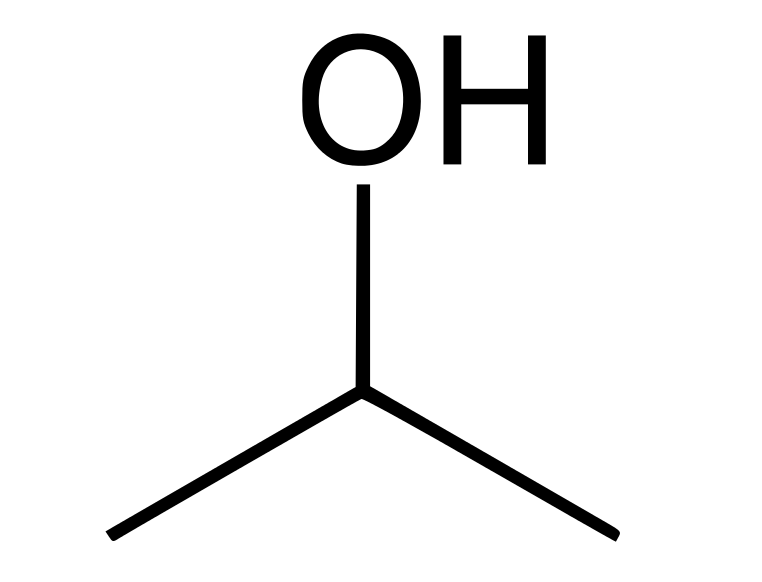
Today's MOTD is worth telling your friends about, it's isopropyl alcohol.
First produced industrially by Standard Oil in 1920 by the hydration of propylene, the world now produces some 2 million tons of the alcohol each year.
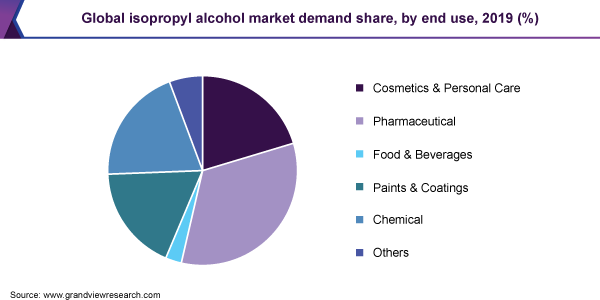
Best known colloquially as rubbing alcohol, this molecule finds most of its use as a solvent for non-polar compounds. As a result you'll find it as an ingredient in the products sold by the cosmetics, personal care, pharmaceutical, paints, and coatings industries (here's a helpful pie chart). While it can be converted into acetone, it's rarely done in practice because the cumene process is more economical in today's environment.
The main companies making all this isopropyl alcohol are Dow Chemical, ExxonMobil, Shell, and INEOS.