| WTI Crude | $68.84/bbl | +0.4% |
| Brent Crude | $72.26/bbl | +0.2% |
| HH Nat Gas | $4.35/MMBtu | +7.9% |
| MB Propane | $1.14/gal | +3.0% |
| 3:2:1 Crack | $22.17/bbl | -2.6% |
Phillips 66 is trying to sell a refinery
US-based refiner, Phillips 66, has put its 256,000 barrel-per-day refinery just outside of New Orleans, Louisiana up for sale.
Some context:
Ever since the onset of COVID-19, we've seen an increased interest from refiners to sell their refineries (or convert them to produce renewables—like what Phillips 66 is doing in San Francisco). Recently, we've seen HollyFrontier (now HF Sinclair) buy refineries from Sinclair Oil and from Shell. But those looking to sell don't always find buyers and not every refinery is worth converting. For example, Shell hasn't found a buyer for its refinery in Convent, Louisiana that it listed on the market a year ago.
So, what's the deal here?
We're seeing quotes from Phillips 66's CEO like "the U.S. refining business in the future is going to be smaller, not bigger". This 50-year-old refinery processes sweet crude in a very competitive region, and as the business declines, the least profitable refineries are going to be the first to go. In any case, some analysts think that Phillips 66 could fetch up to $500 million for the plant. That figure might make the company's $729 million Q2 refining loss a little easier to swallow.
Read more here on Reuters.
Solvay's hydrogen peroxide for semiconductors
Belgian chemical company, Solvay, has announced the formation of a joint venture (JV) alongside Shinkong to produce high-purity hydrogen peroxide for the semiconductor industry.
How do they use it?
Solvay's high-purity hydrogen peroxide is branded as Interox (here is their product page) and is used primarily for two things:
- For etching of printed circuit boards alongside sulfuric acid
- To regenerate cupric chloride etching baths
Basically, in between many steps of the (very complex) chip-making process, hydrogen peroxide is used to remove specific layers to cut out parts of the surface.
Bigger picture:
This new plant, when it starts up in Q1 2023, will pump out 30,000 tons per year of that hydrogen peroxide. That's on par with Solvay's 24,000 ton per year plant they built in China two years ago for the same reason. So long as you're seeing growth in semiconductors (which is tracking 5G, IoT, and AI), you'll see growth in the chemicals we need to make them.
Read the press release here.
Marathon is integrating upstream into soybean oil
American refiner, Marathon Petroleum, and food processor, ADM, have announced the formation of a joint venture (JV) for the production of soybean oil.
A little clarity:
ADM announced plans to build a new $350 million soybean oil production site back in May. The "formation of the JV" is better translated as "Marathon bought a 25% equity stake in ADM’s plant". After the bean crushing and refining site is complete (in 2023) it will produce 300,000 tons per year of soybean oil.
Why did Marathon want in?
Taking a stake in the plant guarantees Marathon a reliable supply of soybean oil (in terms of both price and delivery). The JV will ship that soybean oil 200 miles west to feed Marathon’s refinery in Dickinson, North Dakota. It’s about enough soybean oil to make 75 million gallons of renewable diesel—or roughly half of that refinery’s capacity.
Read the press release here.
The Reboiler:
- Invista is planning to double its Nylon 6,6 production in Shanghai
- ExxonMobil also made a move into renewable diesel (in Canada)
- The US EIA is expecting greater propane consumption this winter
- LyondellBasell's CEO is retiring after holding the position for 6 years
- BASF secured some renewable energy for its catalyst plant in Poland
MOTD: pc
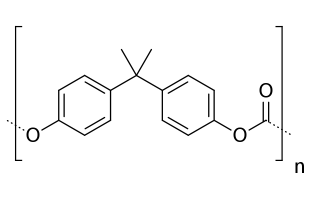
Today's MOTD is the most important one yet: polycarbonate.
First discovered in 1898 by the same guy who invented Novocain, we didn't start producing this molecule commercially until both Bayer and General Electric discovered it at basically the same time in the 1950s.
Today, the world produces about 5 million tons of this stuff each year primarily by reacting BPA and phosgene (although that's not the only way). This tough, transparent, and heat resistant polymer is what we use to make CDs, DVDs, and so much more.
The main two companies producing polycarbonates are just pieces of the companies who started it all—Covestro (a spin-off from Bayer) and SABIC (who bought General Electric's plastic business) are responsible for nearly half of all polycarbonate production.