Good morning. Feel free to reply to this email with your thoughts on today's topics!
| WTI Crude | $70.89/bbl | -0.4% |
| Brent Crude | $73.71/bbl | -0.6% |
| HH Nat Gas | $3.79/MMBtu | -6.4% |
| MB Propane | $1.03/gal | +0.2% |
| 3:2:1 Crack | $20.71/bbl | +4.0% |
Avantium is making FDCA moves
Netherlands-based sustainable chemicals company, Avantium, has announced its final investment decision and will officially build its flagship furandicarboxylic acid (FDCA) plant.
Catching you up:
Avantium was spun-off from Shell in the early 2000s, and has since been working to commercialize the production of a polymer called polyethylene furanoate (PEF) via the polycondensation of FDCA and ethylene glycol (MEG). Avantium has a complicated history that's worth diving into (here or here) if you're interested. In any case, since they bought out BASF's share in 2019, they've been trying to justify the construction of their first FDCA plant. They've been securing financing, finalizing the design, aligning on supply chain agreements, and finding customers willing to pre-order FDCA. Today, they've offically check marked all the boxes and are ready to make it happen.
Some context:
People have been trying to make PEF economically since the 1970s. Not only does the polymer have superior properties to its polyester cousin, PET, but it's also biodegradable. The struggle has been finding a way to make FDCA economically and there has been no shortage of companies who have tried. Avantium claims that it's method—the catalytic dehydration of fructose in an alcohol to make alkoxymethyl furfural (RMF) followed by its oxidation to FDCA—is the way to do it.
Looking forward:
The company didn't provide an update as to when it plans to build the plant, so lets just assume they are on target for 2023 as initially planned.
Read the press release here.
Mitsui is cracking bio-based naphtha
Japanese chemical company, Mitsui Chemicals, has started processing bio-based naphtha at its steam cracker outside of Osaka, Japan.
What are they processing?
Neste, the Finnish refiner, is hydrotreating, isomerizing, and then distilling vegetable oils into a few fractions: a naphtha fraction, a diesel fraction, and a jet fuel fraction. Mitsui is taking that bio-based naphtha, blending it with petroleum-based naphtha, and tossing it right into its steam crackers. Out the other end you'll get the building blocks of the petrochemical industry—like ethylene, propylene, and the rest of the gang.

Bigger picture:
Mitsui's steam cracker is capable of processing 1.5 million tons of naphtha each year. Neste agreed to sell them 10,000 tons of bio-naphtha between October 2021 and March 2022. We'll probably see Mitsui make progressively larger orders and incremental progress as they find customers willing to pay for bio-based products.
The bottom line:
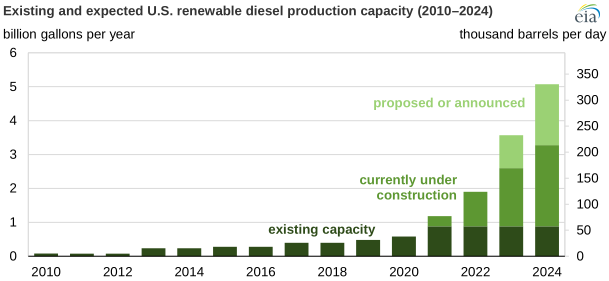
Even if Mitsui wanted to switch to 100% bio-based naphtha they would be hard pressed to find a supply. While the bio-based fuels market is rapidly expanding, most of the new capacity is turning vegetable oils into renewable diesel and SAF (for example, Valero's new renewable refinery makes 10% naphtha). That's why Mitsui is using the same mass-balance approach that we've talked about before, but in the context of molecular recycling.
Read more here on Argus.
The Reboiler:
- Advent and BASF agreed to produce advanced fuel-cell membranes
- Monolith and Goodyear are going to collab on sustainable carbon-black production
- ExxonMobil and Scepter plan to deploy a technology for methane emissions detection
- Novozymes and Saipem are working together to develop enzymatic carbon-capture technologies
- LyondellBasell just announced their new CEO will start in June
MOTD: phosphoricacid
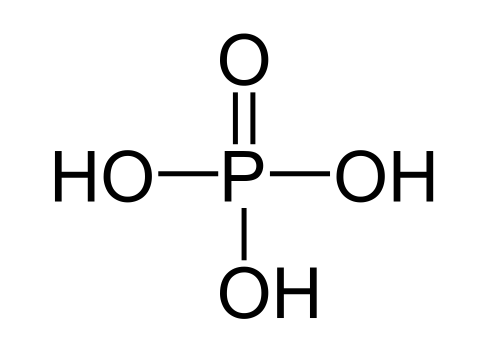
Today's MOTD is the one you've been dreaming about… phosphoric acid.
Independently discovered by by a couple of Swedish chemists, this molecule was first discovered as a component of bone ash in the late 18th century. Today, the world produces some 50 million tons of this stuff each year by mining ore and treating it with heat and other chemicals.
We need all of that phosphoric acid primarily because we need it to make phosphate fertilizers. Over 90% of all phosphoric acid is used to do exactly that (DAP, MAP, and TSP are the main 3). The rest of the acid ends up quite a few different places, including semiconductor manufacturing, toothpaste, and detergents.
The main companies producing all of this phosphoric acid are the same ones who mine the ore. That includes (in no particular order) The Mosaic Company, Nutrien, and even Solvay.