Good morning. Hopefully all this SPK, SAK, and SAF talk makes sense. The press releases aren't super clear on any of it.
| WTI Crude | $69.62/bbl | +4.9% |
| Brent Crude | $73.38/bbl | +3.8% |
| HH Nat Gas | $3.66/MMBtu | -3.4% |
| MB Propane | $0.99/gal | +0.0% |
| 3:2:1 Crack | $18.75/bbl | +3.8% |
United Airlines 100% renewable SAF test went well
Chicago-based airline, United Airlines, had a successful passenger test flight using 100% sustainable aviation fuel (SAF) in one of its jet engines.
Some context:
The ASTM qualifies and approves different types of aviation fuel prior to its commercial use. For example, a jet fuel must have specific properties—like a flash point minimum of 38°C and a freeze point minimum of -47°C. The kerosene coming out of refineries meets those strict requirements.
So what is SAF?
Many different companies are trying to produce synthesized paraffinic kerosene (SPK) by various sustainable methods. Because SPK isn't identical to traditional kerosene (it lacks the necessary aromatics) it must be blended with traditional kerosene. That qualified blend is called SAF.
So, what's going on here?
Virent, a subsidiary of US refiner, Marathon Petroleum, makes something called synthesized aromatic kerosene (SAK) from plant sugars. World Energy blended its SPK with Virent's SAK (instead of traditional kerosene) to make a 100% renewable SAF. United tested the use of the fuel by testing it in just one of the engines to prove that there is no operational difference.
Read the press release here.
More EVs means more copper solvent extractants
Belgian chemical company, Solvay, has announced plans to increase its copper solvent extractants production by 20%.
Copper solvent extractants?
Broadly speaking, these extractants are oximes made by reacting hydroxylamine with either an aldehyde (to make ketoximes) or ketone (to make aldoximes). Solvay makes proprietary mixtures of their own special versions of these molecules (because there are lots of different aldehydes and ketones out there). Then, Solvay sells those mixtures to the mining industry to produce copper via SX/EW.
Why the expansion?
Solvay cited the EIA's forecast that clean energy technology will account for "45% of copper demand in 2040 vs. 24% in 2020". Most critically, we're talking about EV applications in "batteries, motors, inverters, wiring, and in the charging infrastructure". More EVs means we need more copper, which means we need more copper extracting molecules.
Read the press release here.
The Reboiler:
- Ineos rolled out an AI optimization technology to reduce its emissions
- British Airways and Phillips 66 signed a SAF agreement
- The average valve size has been slowly increasing
- Chemours officially sold its mining business that we talked about.
- Venture Global is investing $10 billion in a new LNG plant in Louisiana
MOTD: titaniumdioxide
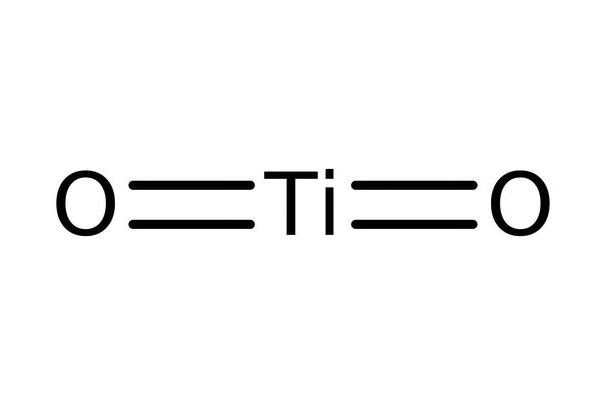
Today's MOTD needs no introduction, it's titanium dioxide.
This molecule was first produced industrially in 1916 when a company outside of Niagara Falls set up shop. Today, most of the 6 million tons we make each year are done by treating titanium ore with carbon and chlorine.
Titanium dioxide is best known for its ability to make white pigment and accounts for about 70% of all pigment production (but there's much more it can do). The solid powder finds itself primarily in paints, plastics, and paper.
The main companies producing all this titanium dioxide includes (but isn't limited to) Chemours, Venator, and Evonik.