| WTI Crude | $84.08/bbl | +0.7% |
| Brent Crude | $84.51/bbl | +1.7% |
| HH Nat Gas | $5.22/MMBtu | -4.9% |
| MB Propane | $1.39/gal | +0.1% |
| 3:2:1 Crack | $18.85/bbl | -7.3% |
Eastman just shed its adhesive resins unit
US-based chemical company, Eastman Chemical, has decided to sell its adhesives resins business to Synthomer for $1 billion.
What are they selling?
Eastman's adhesives resins business includes tire resins, polyolefin resins, rosins, and other chemicals. The sale includes its leading hydrocarbon resins and non-hydrocarbon resins which are used as tackifiers (which alter the stickiness of the surface of an adhesive formulation). Most of this stuff ends up in tapes, labels, packaging, hygiene, construction, and tire markets.
Zooming out:
According to C&EN, Eastman told investors that its adhesives resins and tire additives businesses (which it just sold last June) weren't doing so hot. Eastman's CEO said it himself—"this sale is part of our effort to improve the performance of the Additives & Functional Products segment". Perhaps Synthomer will give the business the attention it deserves and make the acquisition worth that 11x EBITA multiple.
Read the press release here.
Ecolab bought an ion-exchange resin maker
Minnesota-based specialty chemicals company, Ecolab, has announced the acquisition of ion-exchange resin producer, Purolite, for $3.7 billion.
Ion-exchange resins?
These are basically fancy polymers (typically crosslinked polystyrene) that have an affinity for certain molecules. Sold as beads (that look a lot like salmon roe) and packed into a column, these resins are used for things like water purification, sugar purification, radionuclide removal from spent nuclear fuel, and metal extraction from mineral ores.
What makes Purolite special?
Purolite has a unique technology that can produce chromatography resin beads with uniform particle size from a polysaccharide. That enabled them to purify mRNA vaccines and monoclonal antibodies—which, as you might imagine, have been very high growth businesses for the company. Maybe that's what convinced Ecolab to borrow $2.9 billion (and $800 million cash) to do this deal.
Read the press release here.
Toray and LG Chem are separating batteries together
Japanese-based chemical company, Toray, and South Korea's LG Chem have announced the formation of a lithium-ion battery separator film joint venture (JV).
Battery separator 101:
Lithium-ion batteries (LIBs) are primarily composed of a cathode, anode, electrolyte, and separator. The separator, which is typically a permeable membrane soaked with liquid electrolyte, prevents contact between the cathode and anode while allowing for the transport of lithium-ions across the cell. Toray makes a battery separator, called Setela, which is reportedly a porous polyethylene-based multilayer film.
Bigger picture:
Creating these porous multilayer films is a relatively simple step (here's a helpful diagram) in a much longer battery manufacturing process. This JV will start out as 50/50, build new capacity in Toray's existing facilities, and then become majority-owned and operated by LG Chem (70/30) after 2.5 years. With Toray's help, LG Chem will have a quality supply of LIB separators for years to come.

Read the press release here.
The Reboiler:
- Axens and Sumitomo confirmed that they converted waste into polyethylene in the lab
- Mitsui Chemicals will use Mitsubishi Chemical's renewable-naphtha-based MEG to make PET
- Evonik decided to acquire a plant-extract producer called Botanica
- Jacobs just landed an $8 Billion contract from the US DOE
- Dow's CEO talked to Jim Cramer on Mad Money about plastics being sustainable
MOTD: allylchloride
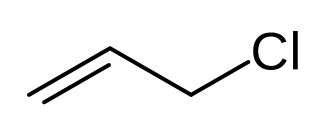
Today's MOTD is a great conversation starter, it's allyl chloride.
First produced by a couple of chemists named August in 1857, the world now produces over 1 million tons of the molecule each year. Shell was the first company to commercialize the technology by reacting propylene and chlorine at their Deer Park, TX site sometime in 1945. Dow Chemical got to it about a decade later in Freeport, TX.
Virtually all allyl chloride is produced by the chlorination of propylene. The vast majority of the stuff is used to make ECH (which ends up epoxy resins), but allyl chloride is also a feedstock for allyl alcohol, , and synthetic mustard oil.
The allyl chloride market is partially consolidated with the main producers including (but not limited to) Solvay, Osaka Soda, an Ineos subsidiary, and Olin.