| WTI Crude | $71.00/bbl | +1.6% |
| Brent Crude | $72.05/bbl | +1.0% |
| HH Nat Gas | $3.23/MMBtu | +3.2% |
| MB Propane | $0.95/gal | +1.9% |
| 3:2:1 Crack | $15.46/bbl | -9.8% |
Ascend to make more polyamides for fishing and batteries
Global leader in the production of Nylon, Ascend Performance Materials, has announced plans to expand production of long-chain polyamides (LCPA) at its plant in Greenwood, South Carolina.
What are they making?
LCPAs, specifically polyamide 610 and 612, have traditionally been produced to make monofilaments—which you can probably imagine best as a typical fishing line (although there are far more use cases). Thanks to their high chemical resistance, UV stability, hydrolysis resistance, and ductility these polymers are also useful as outdoor cable ties and battery seals. Check this out if you want to read about how LCPAs are produced.
So, they plan to make more?
Ascend has been producing polyamide 66 for decades at this site through the polycondensation of HMD and adipic acid. Because polyamide 610 and 612 also use HMD as a feedstock, the expansion should integrate well with Ascend's existing assets.
Read the press release here.
Eastman sold most of its tire additive business
US-based chemical company, Eastman Chemical, has decided to sell a portion of its tire additives business to a private equity firm for $800 million.
What are they selling?
Eastman is selling some of its product lines (along with their related assets and technologies) that are used to produce rubber and improve its durability. That includes Crystex (which provides the sulfur for vulcanization), Santoflex (which prevents rubber degradation), and Duralink (which does a lot of things).
So, what's next?
The private equity firm that made the acquisition plans to "enhance the portfolio of product and service offerings" and "drive [the business'] growth as an independent company". It appears that Eastman would rather take the cash from the sale for investment elsewhere instead of trying to aggressively grow this particular business.
Read the press release here.
Air Products is investing big in blue hydrogen
Pennsylvania-based industrial gases producer, Air Products, has announced plans to build a $1.1 billion blue hydrogen complex in Alberta, Canada.
Some context:
Roughly 95% of the hydrogen produced today is done by the steam reforming of methane (natural gas). That process produces large quantities of CO2 that are typically emitted to the atmosphere. Air Products is looking to produce hydrogen in this same manner—the only real difference being that the company plans to capture and sequester the CO2 produced by the process.
Zooming out:
The push for sustainability and reduced emissions is showing no signs of slowing down—and for better or worse it's clear that hydrogen will have a seat at the table. The majority of the hydrogen produced by Air Products' new complex (more than 98%) will be used for typical hydrogen use cases (like hydrodesulfurization at refineries and for fertilizer production). So when you read about how liquid hydrogen can be used to fuel buses and do all sorts of magic, keep in mind that hardly any of it will actually be used to do such things.
Read the press release here.
The Reboiler:
- Neste wants to use 100% renewable energy globally by 2023
- Chevron Lummus Global and ARA are providing the technology for this renewable fuels plant in Iowa
- Equinor decided to sell its refining business in Denmark
- Suez and Airex Energy are planning to to commercialize their carbon capture technology
- Exxon is going to spend $240M on improvements for its Baton Rouge refinery
- Dow Chemical is going to build a new MDI distillation and prepolymers facility
MOTD: phenol
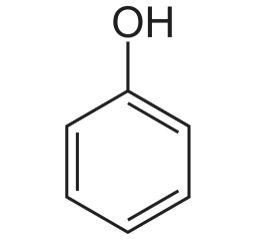
Today's MOTD is the one you've been waiting for… phenol.
First extracted from coal tar by a German chemist in 1834, the world is now producing nearly 12 million tons of phenol each year. While the molecule got its start as an antiseptic, today it is primarily used to make BPA (about 50%) and phenolic resins (about 30%). The rest becomes alkylphenols, a precursor to nylon, and adipic acid (here's a reference chart).
Pretty much all of the phenol produced is made by the cumene process which conveniently produces the other BPA monomer—acetone. Quite a few different companies produce phenol, but Ineos is responsible for about 1/3 of the world's production. While most of the world's phenol is made in Asia, the largest US producers include , Shell, SABIC, and Olin.