| WTI Crude | $68.19/bbl | -4.4% |
| Brent Crude | $70.99/bbl | -4.0% |
| HH Nat Gas | $4.20/MMBtu | +4.5% |
| MB Propane | $1.12/gal | +2.3% |
| 3:2:1 Crack | $21.37/bbl | +4.9% |
Ineos sold its one and only sulfur plant
British chemical company, Ineos, has completed the sale of its sulfur business to the International Chemical Investors Group (ICIG) for an undisclosed sum.
What was the business?
Ineos' sulfur business consists of just one manufacturing site—a plant in Bilbao, Spain that spits out a grand total of 400,000 tons of sulfuric acid, oleum, and molten sulfur each year. The plant, originally built by ICI, combines elemental sulfur (which could be from the oil & gas industry or these Spanish mines) with oxygen and water via the contact process.
Who needs sulfur?
While this stuff is used all over the place, most of it (60%) is used to make fertilizers. You'll find the rest of it being used as a component in detergents, a catalyst (notably for nylon and isobutylene production), for piranha solution in the semiconductor industry, the electrolyte in your non-EV car battery, and even as a drain cleaner.
Read the press release here.
BASF's stabilizer is keeping syringes clear
German chemical giant, BASF, is producing a processing stabilizer used to make high-clarity polypropylene (PP) for syringes.
A little context:
For those who are unfamiliar, adding stabilizers to polymers is a common practice, as virtually all manufactured polymers degrade and tend to turn yellow over time. BASF produces a range of stabilizers called Irgastab that have found a solid end market in medical-grade PP because PP is being used to produce syringes.
Bigger picture:
The demand for syringes has been significantly higher in the last 6 months (have you heard of COVID-19?). The syringes used to administer the vaccine are required to meet a grade of optical clarity that can't be achieved with PP alone. Those syringes need to be clear so that the vaccine inside can be properly inspected.
Read the press release here.
Brenntag buys another chemical distributor again
German chemical distribution company, Brenntag, has announced that it has acquired Matrix Chemical for an undisclosed sum.
Here's some background:
Chemical distributors play an important role in connecting chemical manufacturers with their ultimate customers. The last time we saw Brenntag was when the company acquired a Canadian distributor for just $12 million. With annual sales totaling $200 million already this year, acquiring Matrix certainly cost Brenntag a pretty penny (for comparison, Brenntag pulls in $12 billion per year).
So, why the acquisition?
As the largest acetone (primarily used as a solvent and precursor to Plexiglas) distributor in North America, Matrix brings a hefty portfolio to Brenntag's table. The company's storage tanks and terminals storage tanks at bulk terminals in Texas, Illinois, Pennsylvania, and North Carolina will "perfectly complement" Brenntag's existing operations. Basically, the acquisition will make Brenntag larger and more capable of fulfilling its customer's needs.
Read the press release here.
The Reboiler:
- Westlake Chemical decided to buy a recycled plastic producer called Dimex
- Jiangsu Sailboat Petrochemical (great company name btw) will be using LyondellBasell's technology to make EVA and LDPE
- Eastman Chemical is going to help P&G achieve their packaging goals
- Evonik just bought a German biotech company to expand its biomaterials portfolio
- Avient is expanding its 5G materials portfolio with a new low-loss dielectric thermoplastic
MOTD: propylene
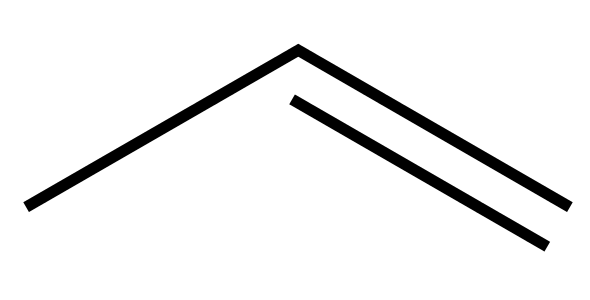
Today's MOTD is the one you've been dreaming about… propylene.
This molecule rose to fame shortly after two scientists at the Phillips Petroleum Company discovered that propylene can be used to make a valuable white solid in 1951. Over the course of the next few decades the demand for polypropylene (PP) made its monomer the second most popular olefin globally.
Today, the world produces over 110 million tons of the stuff each year. About 75% of it is made with steam crackers and FCC, and over two-thirds of it is used to make PP. The rest of that propylene is useful as well—7% of it becomes PO, 7% oxo alcohols, 6% acrylonitrile, 4% acrylic acid, and 4% cumene (more details can be found here).
The main companies producing all this propylene include SABIC, Dow Chemical, BASF, and basically any other company with a steam cracker or two.