| WTI Crude | $47.47/bbl | -1.8% |
| Brent Crude | $50.37/bbl | -1.7% |
| HH Nat Gas | $2.60/MMBtu | +8.8% |
| MB Propane | $0.75/gal | +0.3% |
| 3:2:1 Crack | $10.88/bbl | -5.3% |
Ineos completes $5B acquisition from BP
British chemical company, Ineos, has completed the $5 billion acquisition of BP's chemical businesses.
Some context:
This may seem like old news because Ineos announced the acquisition back in July, but that doesn't always mean it's a done deal. The company is taking 15 manufacturing sites from BP (and BP's stake in 10 other joint ventures) that produce purified terephthalic acid (PTA), paraxylene, acetic acid, and many of its derivatives.
Why is BP selling?
This actually isn't the first time INEOS acquired some of BP's chemical business, but it might be the last. After BP's new strategic plans were announced, it became clear that BP no longer wants to be an integrated oil company. Instead, the cash from the sale will be used to fund its future core business (energy, and not just from oil).
Read the press release here.
Brenntag buys another chemical distributor
German chemical distribution company, Brenntag, has announced that it has acquired Canadian chemical distributor, Alpha Chemicals for an undisclosed sum.
Some helpful background:
Chemical distributors play an important role in connecting chemical manufacturers with their ultimate customers, but these two companies are playing on very different levels. Brenntag is one of the world's largest chemical distributors with over $12 billion in annual revenue. Alpha Chemical on the other hand is much smaller—with sales of just $12 million annually.
What the acquisition means:
Alpha Chemical has a strong reputation in the region and can "support the expansion" of Brenntag's new Canadian Essentials and Specialties divisions. The acquisition will bring Brenntag closer to existing customers, get them some new customers (from Alpha), and provide those new customers with Brenntag's wide range of solutions.
Read the press release here.
Potential new biofuels plant in South Dakota
Colorado-based renewable chemicals company, Gevo, has announced that it may build a new renewable fuels complex in South Dakota.
The details:
Gevo has optioned the right to purchase (acquired the right to purchase in the future in exchange for a small fee) some land near Lake Preston, South Dakota. This sort of land agreement comes at an early stage in a potential project's planning (not unlike what we saw Grön Fuels do last month).
Taking a step back:
Renewable fuels are produced by converting the sugars or cellulose from plant matter into fuels for combustion. Typically that means converting sugars into ethanol or converting fats into biodiesel, but Gevo is also looking to produce other fuels (like isobutanol). The plant Gevo wants to build in South Dakota could produce "45 million gallons per year collectively of jet fuel and renewable gasoline products.".
Read the press release here.
The Reboiler:
- The ACC says that chemical activity was up in December
- Entegris drops $200 million on a new facility in Taiwan
- India's first ethanol plant will be a public-private partnership
- Nova Chemical SVP talks about chemical recycling
- It looks like Exxon might have a $20 billion writedown
MOTD: sodiumbicarbonate
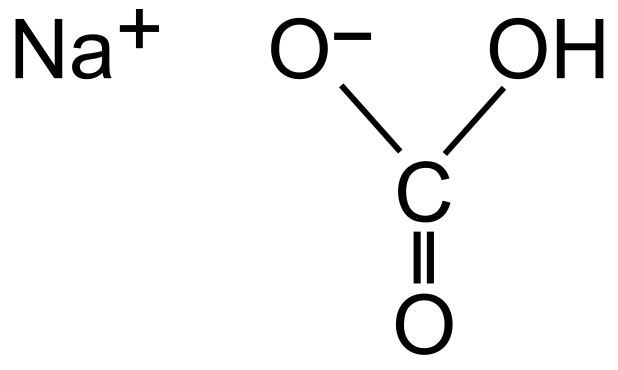
Today's MOTD is the best one yet: sodium bicarbonate.
Sodium bicarbonate, also known as baking soda, is primarily produced from sodium carbonate in the Solvay process but can also be made by other methods.
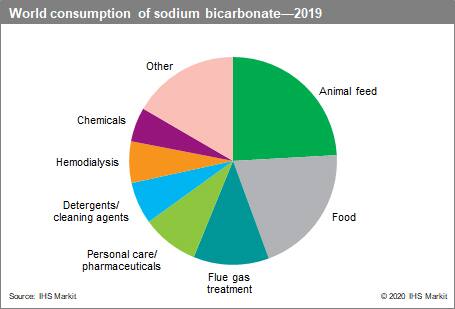
More than half of the 8 million tons of sodium bicarbonate made each year are made in Asia. It's companies like AGC Chemicals, Solvay, Novacap, Church & Dwight, and Tata Chemicals that produce most of that baking soda. Most of the sodium bicarbonate is used in animal feed and the food industry, but it is also notably used in flue gas treatment and detergents (check out this pie chart).