
| WTI Crude | $73.06/bbl | -1.5% |
| Brent Crude | $75.74/bbl | -1.3% |
| HH Nat Gas | $3.80/MMBtu | +2.7% |
| MB Propane | $1.10/gal | +0.9% |
| 3:2:1 Crack | $18.50/bbl | +9.3% |
Sasol sold part of itself that helps make gold
South African petroleum company, Sasol, has decided to divest its sodium cyanide business to privately-owned Czech company, Draslovka, for $100 million.
What are they selling?
Sodium cyanide is typically produced by reacting sodium hydroxide with hydrogen cyanide (hydrogen cyanide comes from reacting alkanes with ammonia). The stuff is primarily used to leach gold from ore in the mining industry.
So, why the sale?
Sasol is saying the the "transaction is part of Sasol's ongoing, strategy-aligned, asset divestment program.". Despite currently high oil prices, Sasol is looking forward and aiming to sell assets that make them For Sasol, that means selling assets that make the company "sustainable in a low oil price environment.". For Draslovka, the acquisition is in line with the companies primary focus—cyanide-based chemicals. Draslovka will use its expertise to add value to the site through future investment.
Read the press release here.
These big companies want to capture CO2 in France
Air Liquide, Borealis, ExxonMobil, TotalEnergies, and Yara will collaborate on a feasibility study for the development of a CO2 infrastructure to decarbonize the industrial region in Normandy, France.
What's going on here?
All of these companies, whether they are producing industrial gases, chemicals, fuels, or fertilizers, are emitting CO2 in Normandy. Much like we saw a bunch of companies do in Norway, these companies are getting together to put their CO2 emissions down the same pipes.
Why a feasibility study?
France has committed to reducing its greenhouse gases by 40% by 2030. If France wants to hit that number, the major industrial players in the region are going to need some financial assistance (remember, capturing carbon doesn't make anyone money). So, these companies are getting together to jointly submit a proposal with the hope of receiving "funding from European, French, and Regional schemes". We'll hear more about the project if it turns out to be technically and economically feasible.
Read the press release here.
Haldor Topsoe's new catalyst plant in Texas
Danish chemical technology company, Haldor Topsoe, has announced plans to build a new catalyst plant at the company's existing site just outside of Houston, Texas.
The details:
Topsoe's new plant, which will be operational sometime in 2023, will be capable of producing 15,000 tons per year of catalyst for hydroprocessing (that means hydrogenation, hydrocracking, and hydrotreating). The company will be specifically producing catalysts that are part of their TK catalyst family.
Zooming out:
Haldor Topsoe has been making catalysts at this site for the last 50 years. The capacity expansion is being built to meet increased demand in traditional refining (because the catalysts help produce cleaner fuels) and in the production of renewable diesel and jet fuel (because sustainability is the move). The new plant will especially "reduce lead time and secure stable deliveries" for Topsoe's US-based customers and do the same, to a lesser extent, for customers in the Middle East and Southeast Asia.
Read the press release here.
The Reboiler:
- BASF's venture arm just invested in an Indian company working on hydroponics
- Shell decided to join a natural gas-to-hydrogen project going down in Norway
- Thailand's PTT Global Chemical dropped $4.75 billion to buy a European specialty chemicals producer
- MOL Group and Tatneft are going to construct rubber bitumen plant in Tartarstan
- Siemens started to build a large green hydrogen plant in Germany
- Chevron might permanently shut down its fluid catalytic cracker in Pasadena, TX
MOTD: po
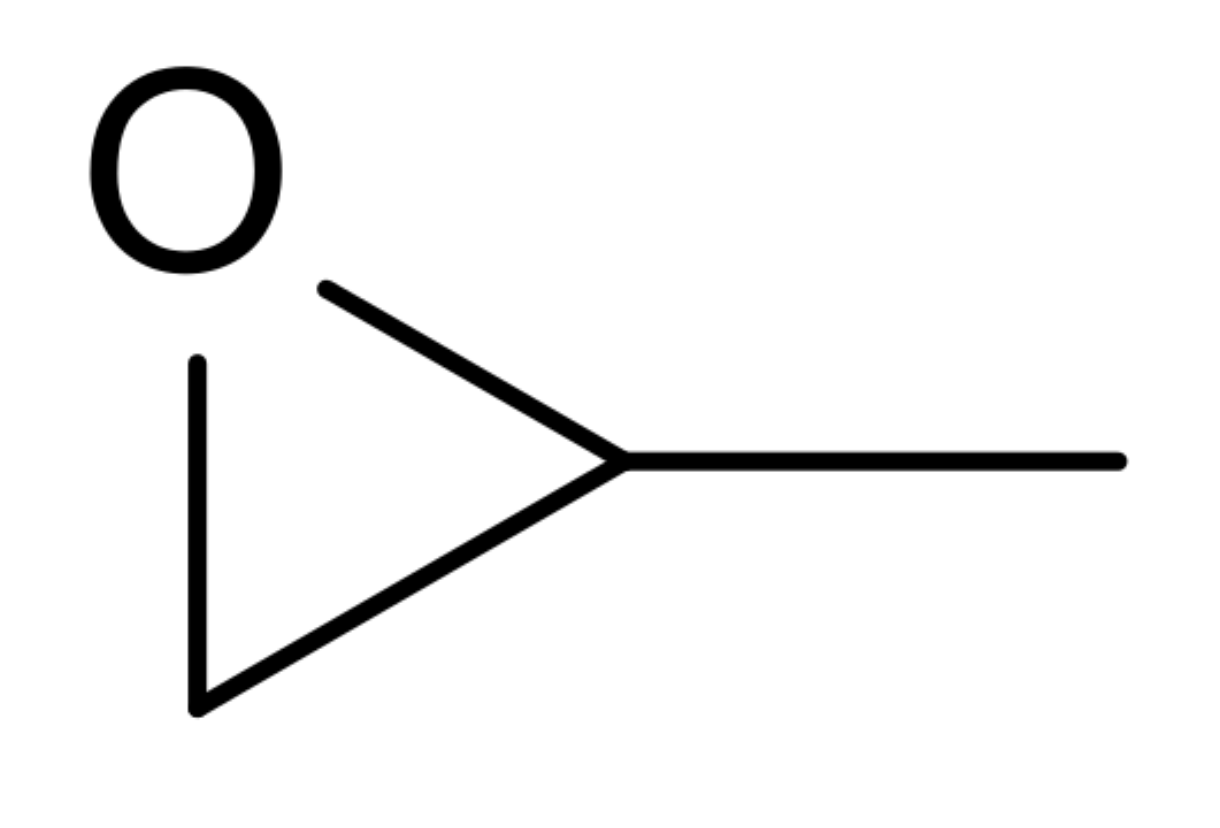
Today's MOTD is the most important one yet: propylene oxide.
First produced by Oser in 1861, propylene oxide (PO) was the first chiral molecule detected in space and is occasionally used to pasteurize raw almonds.
Today, the world produces more than 10 million tons of PO each year. About 70% of it is used to make polyether polyols (which become polyurethanes), 20% becomes propylene glycol (to make UPRs and anti-freeze), and the rest mainly becomes propylene glycol ethers (used as solvents).

The production of PO frequently comes with a co-product (here's an introduction to that issue) that depends on the chosen production process. Producers can make PO a few different ways—with the chlorohydrin, peroxidation (PO/SM, PO/TBA), or hydroperoxidation (HPPO and HPCU) process. The two largest companies making this PO are Dow Chemical and LyondellBasell, but there's quite a few other major producers out there as well.