| WTI Crude | $64.92/bbl | -0.1% |
| Brent Crude | $68.61/bbl | -0.2% |
| HH Nat Gas | $2.93/MMBtu | +1.0% |
| MB Propane | $0.81/gal | +0.4% |
| 3:2:1 Crack | $20.10/bbl | +0.4% |
CP Chem is going to build a 1-hexene plant
US-based Chevron and Phillips 66 joint venture, Chevron Phillips Chemical (CP Chem), has announced its plans to build a 266,000 ton per year 1-hexene unit near the company's site outside of Old Ocean, TX.
A little background:
Linear alpha olefins (LAO) are a very useful class of olefins that don't seem to get much attention (here is a great overview). CP Chem is looking to produce one specific LAO, 1-hexene, by trimerizing ethylene. The company plans to use that 1-hexene as a comonomer with ethylene to make HDPE and LLDPE.
What makes CP Chem special?
Typically, a wide range of LAOs, from 4 to 30+ carbons, are produced in the same oligomerization process and separated afterward. The unit CP Chem plans to build (set to start up in 2023) produces strictly 1-hexene using the company's proprietary catalyst developed in the mid-1990s. The new plant will be CP Chem's second on-purpose 1-hexene plant and will help the company "remain a leading 1-hexene supplier".
Read the press release here.
Axalta can officially make more water-based coatings
Philadelphia-based coatings producer, Axalta, has announced the completion of its waterborne coatings plant expansion in Shanghai, China.
Coatings 101:
Pretty much all coatings (aka paint with a purpose) are made of four components—a resin (acrylics, epoxy, etc), solvent, pigment, and some other additives. Waterborne coatings use water as the solvent instead of one of these petroleum-derived solvents.
Why it matters:
The waterborne coatings that end up on cars (and buildings, homes, etc) are attractive primarily because of their environmental and health benefits. Less solvent means fewer VOCs emitted to the atmosphere and fewer VOCs inhaled by those applying the coating. That being said, these friendly water-based coatings do have some disadvantages worth considering.
Read the press release here.
LyondellBasell used plastic waste to make plastic
Global petrochemical corporation, LyondellBasell, has announced the successful production of polypropylene (PP) and polyethylene (PE) from plastic waste at its site in Wesseling, Germany.
What that means:
We've seen this before—but last time it was ExxonMobil making the same announcement (and it was CP Chem before that). Basically, LyondellBasell has successfully cracked a plastic-waste-based feedstock (probably pyrolysis oil) in its existing steam crackers and polymerized the resulting ethylene and propylene.
What to keep an eye on:
LyondellBasell is the only major petrochemical company that currently has a pilot plant depolymerizing plastic waste. While it's not clear if the company produced its own feedstock for today's announcement, it is clear that LyondellBasell is taking the waste issue seriously.
Read the press release here.
The Reboiler:
- This article from Bloomberg is a good overall update on the chemical industry
- Azelis has now entered the flavors and fragrances market in the US
- Baker Hughes and Bloom Energy are partnering to make hydrogen
- thyssenkrupp will be providing batteries for China's coke ovens
MOTD: aceticacid
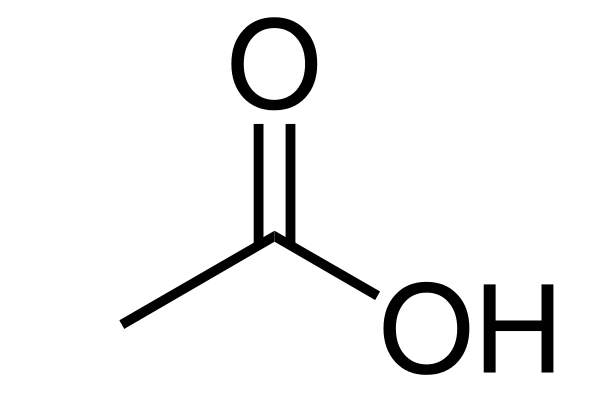
Today's MOTD is the world famous, acetic acid.
You're probably familiar with acetic acid in its diluted form (vinegar), but only a small fraction (less than 10%) of the 22 million tons of acetic acid produced each year actually end up dressing salads and pickling vegetables.
Most acetic acid (roughly 75%) is produced by reacting methanol with carbon monoxide, but it can also by made by oxidizing acetaldehyde or ethylene. Some of the largest producers of acetic acid are Celanese, INEOS, Eastman, and LyondellBasell.
About 30% of acetic acid is used to produce vinyl acetate monomer, 30% to produce acetic anhydride, 20% to produce esters (like ethyl acetate, n-butyl acetate, isobutyl acetate, and propyl acetate), and 20% to produce terephthalic acid.