| WTI Crude | $52.16/bbl | -1.2% |
| Brent Crude | $55.25/bbl | +0.3% |
| HH Nat Gas | $2.68/MMBtu | -3.2% |
| MB Propane | $0.87/gal | -4.6% |
| 3:2:1 Crack | $13.29/bbl | +1.9% |
Solar-powered acetyls and acrylics in Clear Lake
US-based chemical corporation, Celanese, has announced the signing of a 15-year agreement to incorporate solar power at its site in Clear Lake, TX.
More on the agreement:
Calpine Energy Solutions will provide Celanese with up to 45 MW of solar capacity for its electricity needs at the site (it's not clear where those solar panels will be located). On an annualized basis, that's equivalent to 142,000 MWh (roughly 14,500 cars off the road). It isn't quite enough juice to satisfy all of Celanese's electricity needs, but it will replace about a third of the site's current electricity mix.
An added bonus:
While Celanese pumps out tons of methanol and acetic acid (plus their derivatives), this site is also home to a couple of units owned and operated by Arkema. Arkema, the spin-off from Total, will be included in Celanese's agreement with Calpine. That means that Arkema will also be incorporating solar power into its electricity supply mix, reducing the emissions associated with the production of its acrylic acid and acrylic esters.
Read the press release here.
Shin-Etsu wants to make more before it has made any
Japan's largest chemical company, Shin-Etsu, has announced an expansion of its brand new chlor-alkali and vinyl chloride monomer (VCM) facility in Louisiana.
The details:
It was just a couple of years ago that Shin-Etsu decided to build a greenfield facility in Plaquemine, LA. The site, which isn't done being built quite yet, was planned to produce roughly 300,000 tons each of VCM, polyvinyl chloride (PVC), and caustic soda per year. The company has decided to spend an additional $1.25 billion to more than double the site's initial production capacity. The initial project should be completed by the middle of this year, and the expansion will be done sometime in 2023.
Why do we need all that PVC?
The company is doing this expansion because global demand for PVC has increased by an average of 1 million tons per year in the last decade. Most of that demand is coming from China (80%) because demand for PVC is closely tied to the construction industry (pipes, doors, window frames) and China is growing. By making that PVC with cheap US ethylene, Shin-Etsu will likely look to export what they produce.
Read the press release here.
BASF to supply a battery recycling start-up with electrolyte
German chemical giant, BASF, has announced that it will be supplying a lead-acid battery recycler with the electrolyte required for its recycling process.
What the recycler is doing:
Typically, lead-acid batteries are recycled by smelting them at high-temperatures with many emissions. AquaMetals is a start-up that has figured out how to extract pure lead ingots from lead-acid batteries with a room temperature modular water-based process (here's a video). The new process requires an electrolyte, but AquaRefining won't be the one producing it.
That's where BASF comes in:
BASF has struck a deal with the start-up to provide the electrolyte that will be used "for all new licensee facilities and will be the preferred supplier partner" for all of AquaMetals' current licensees. If adopted widely, BASF could soon be producing quite a bit of this "specially formulated AquaRefining electrolyte".
Read the press release here.
The Reboiler:
- SK Chemical and Brightmark team up to chemically recycle plastic
- Marathon Oil reduces CEO and Board compensation by 25%
- Haldor Topsoe’s renewable diesel tech to be used in Oklahoma
- Sumitomo invests in a hydrogen fuel provider
- Biden's EPA will be tougher on toxic chemicals
- This coatings producer is sponsoring an IndyCar race driver
- BASF buys an old power plant in Texas
MOTD: formaldehyde
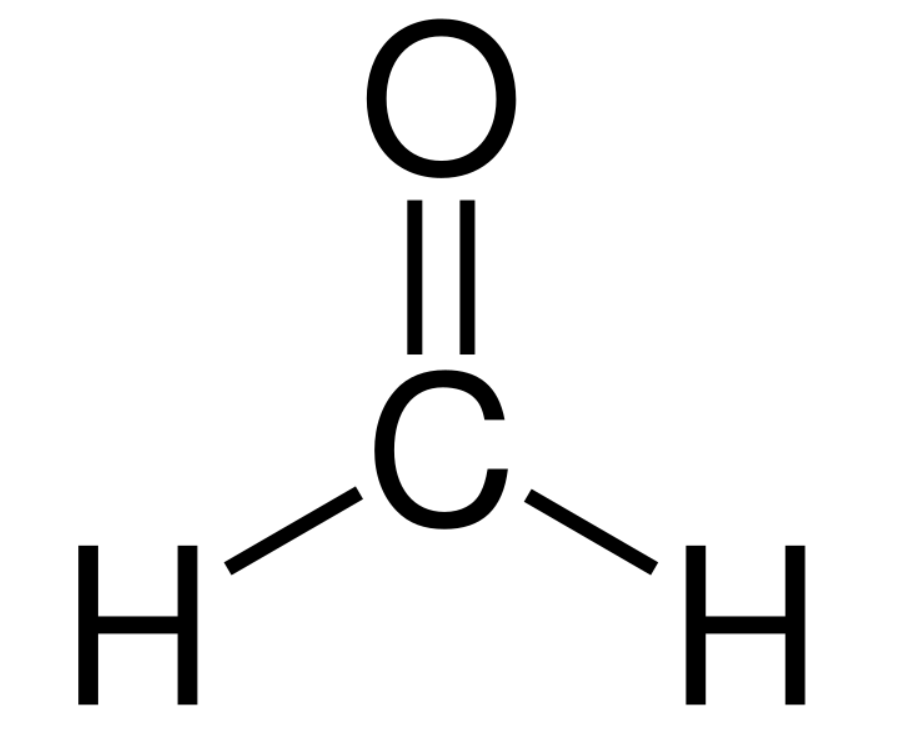
Today's MOTD is the best one yet: formaldehyde.
You probably came across formaldehyde for the first time when dissecting a frog in middle school (does this give you any flashbacks?). Today, the world produces some 45 million tons of the molecule each year. Most of all that production is done in the same way, at least in principle, that August Wilhelm von Hofmann came up with in the late 19th century.

Typically, formaldehyde is produce by the catalytic oxidation of methanol in the Formox process. Nearly 70% of all formaldehyde production is used to make urea-, phenol-, and melamine-formaldehyde resins (aka UF, PF, and MF). The remaining 30% is most notably used to produce BDO (which becomes Spandex) and MDI (which becomes rigid foams).
Some of the world's largest formaldehyde producers are Georgia-Pacific, Hexion, Dynea, BASF, and Huntsman. While the production of formaldeyde is relatively simple, it's costly to transport, so most formaldehyde is consumed where it is produced.